

WHY DOES MY SKIN LOOK GOOD ONE DAY AND TERRIBLE THE NEXT?
Your skin isn't actually changing overnight for no reason. Moisture, oil, irritation, hormones, weather, products and even the way you treat your skin can change how it looks from one day to the next.
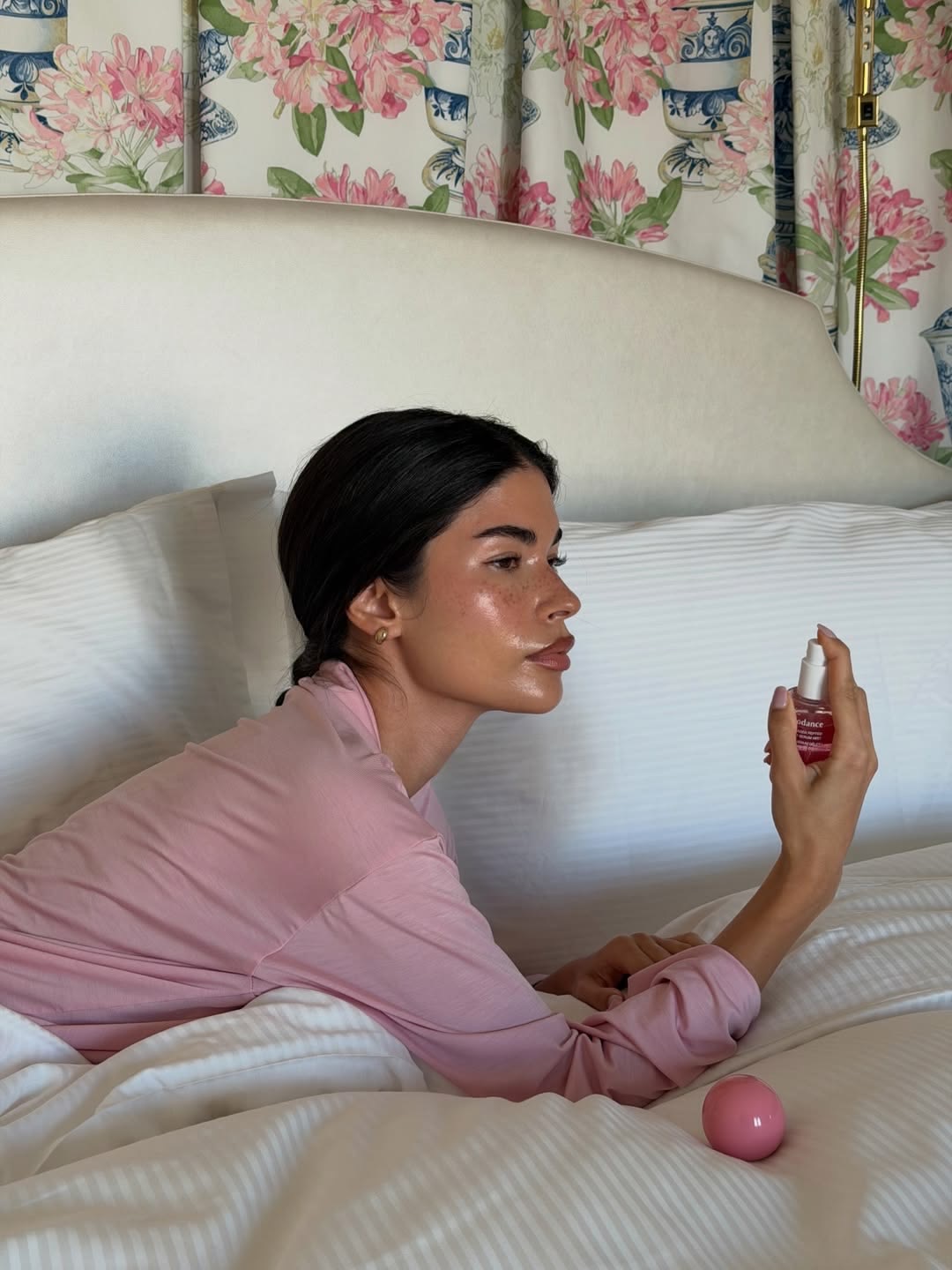
We've all had that experience. One morning you look in the mirror and your skin looks smooth, calm and somehow better than usual. Your makeup sits perfectly, your pores seem less noticeable and you feel like you've finally figured out what your skin wants. Then, sometimes only a day later, you wake up with dryness, extra oil, little bumps or a texture that seems to have appeared overnight.
The first instinct is usually to blame the skincare products you're using. Maybe your moisturiser stopped working. Maybe you suddenly need a new serum. Maybe you need to exfoliate more. But skin doesn't behave like a machine where the same routine produces exactly the same result every day. Your skin is constantly responding to what is happening around it.
That doesn't mean every bad skin day has a complicated explanation. Often, several small things happen at once. You sleep differently, the weather changes, you use a new product, your skin becomes slightly irritated or you simply touch your face more than usual. Understanding those changes is much more useful than changing your entire routine every time your skin looks different.
FIRST, UNDERSTAND WHAT YOUR SKIN IS ACTUALLY DOING
One of the easiest mistakes to make is treating every skin problem as the same problem. Dryness, dehydration, excess oil, irritation and breakouts can look similar at first, but they aren't necessarily caused by the same thing.
Your skin can also be oily and dehydrated at the same time. It can feel tight immediately after cleansing and then become shiny a few hours later. That doesn't automatically mean you need a stronger cleanser. In some cases, repeatedly stripping the skin can leave it feeling uncomfortable while still producing plenty of oil.
WATER AND OIL ARE NOT THE SAME THING
This distinction is especially useful when trying to understand why your skin can look completely different from one day to the next. Dehydrated skin is lacking water, while dry skin generally refers to a skin type that produces less oil. You can have oily skin that is dehydrated, or naturally dry skin that is well hydrated.
Dehydrated skin can look dull, feel tight and make fine lines or texture appear more noticeable. Makeup can also sit differently on it, especially around the nose and under the eyes. If your skin suddenly looks much better after a gentle routine and a good moisturiser, that can be a clue that hydration was part of the problem rather than a sign that you needed another exfoliating product.
YOUR SKIN CAN REACT TO THE WEATHER
Temperature and humidity can make a noticeable difference to how your skin feels and looks. Cold, dry air can leave skin feeling tight and uncomfortable, while heat and humidity can make you sweat more and make your skin appear shinier.
Indoor environments matter too. Heating and air conditioning can make the air around you drier, which can affect how comfortable your skin feels. You don't necessarily need a completely different skincare collection for every season, but you may need to adjust how much moisturiser you use and how aggressively you cleanse or exfoliate.
YOUR SKINCARE ROUTINE CAN ACTUALLY BE THE PROBLEM
More skincare isn't automatically better skincare. Using several active ingredients at once can make it difficult to know what is helping and what is irritating your skin. Acids, retinoids, strong exfoliants and other active ingredients can be useful for specific concerns, but using too many products or introducing them too quickly can leave your skin feeling sensitive.
This is one reason your skin can sometimes look better after doing less. If you've recently added several new products and your skin has suddenly become red, tight, rough or unusually reactive, don't assume you need to add another product to fix it. Simplifying your routine temporarily can make it easier to identify what changed.
YOUR SIMPLE SKIN RESET
THEN LOOK AT WHAT CHANGED YESTERDAY
If your skin suddenly looks different, think backwards instead of immediately shopping for a solution. Did you use a new product? Did you exfoliate? Did you sleep with makeup on? Did you spend a long time outside? Was it unusually hot or cold? Did you spend more time touching your face?
You don't have to analyse every single detail of your day. The useful part is looking for patterns. If your skin repeatedly becomes irritated after using one particular product, that's more meaningful than one random bad skin day. Patterns tell you much more than a single morning in the mirror.
HORMONES CAN CHANGE THE WAY YOUR SKIN LOOKS
Hormonal changes can influence oil production and the way your skin behaves. This is one reason some people notice more breakouts or increased oiliness at certain points in their menstrual cycle. Stress can also affect the skin indirectly, particularly when it changes your sleep, routine or other habits.
The important thing is not to assume that every breakout is hormonal. Skin has many possible triggers, and one difficult week doesn't tell you exactly what caused it. If you repeatedly notice the same pattern around the same point in your cycle, however, that information can be useful to keep track of and discuss with a healthcare professional if the problem is persistent or severe.
STOP CHANGING EVERYTHING AT ONCE
This might be the most useful rule of all. When your skin looks bad, it's tempting to replace your cleanser, buy a new serum, start an acid, change your moisturiser and add a mask all in the same week. The problem is that if your skin improves, you won't know what helped. If it gets worse, you won't know what caused it.
Change one meaningful thing at a time whenever possible. Keep the rest of your routine consistent and give yourself enough time to observe what happens. This makes skincare much less like guessing and much more like figuring out what your own skin responds well to.
KNOW WHEN IT IS MORE THAN A BAD SKIN DAY
A little dryness, an occasional spot or a few days of extra oiliness are normal experiences for many people. But persistent redness, painful or deep acne, severe itching, swelling, burning, crusting or skin that repeatedly becomes irritated deserves more attention than simply buying another skincare product.
If something is persistent, painful, rapidly changing or worrying you, a GP, dermatologist or other qualified healthcare professional can help work out what is actually happening. Skincare can support healthy skin, but it isn't a substitute for getting a persistent skin problem properly assessed.
It's responding to something.
The trick is learning to notice what.